
Mental Toughness Secrets of the Greatest Athletes of All Time
At SPMI, we have spent years researching what separates many of the greatest athletes of all time from the rest. Through that process, we have developed specific mental training frameworks designed to elevate SPMI athletes toward and beyond the standards demonstrated by history’s elite performers. Learning from the greats opens the door for athletes to maximize their potential, improve faster, and achieve goals they may have once believed were out of reach. Even more importantly, many of the mental strategies utilized by the world’s best athletes are not limited to sports alone. At SPMI, we integrate these principles into our athletes’ daily lives, transforming ordinary routines into opportunities for meaningful growth, discipline, and long-term personal development. Here are a few of the most mentally tough athletes ever to compete, athletes who also established themselves among the greatest performers in sports history.
What separated athletes like Michael Jordan, Michael Phelps, and Rafael Nadal from the rest was not simply talent. Many athletes are talented. What separated them was their mentality, the way they approached pressure, preparation, adversity, and daily discipline.
Michael Jordan became legendary not because he never failed, but because he refused to let failure define him. After being cut from his varsity basketball team as a teenager, he turned rejection into fuel. Jordan developed an obsession with preparation and competition. He understood something many athletes never fully grasp. Confidence is earned through preparation. When pressure arrived, he trusted the work he had already put in.
Michael Phelps displayed a different but equally powerful form of mental toughness. Phelps trained with incredible consistency and attention to detail. His coach, Bob Bowman, often emphasized visualization and mental rehearsal as major parts of his preparation. Phelps would mentally rehearse races repeatedly, imagining every detail from the start to the finish. This mental preparation helped him stay calm during high pressure Olympic moments. Even when unexpected problems occurred, such as his goggles filling with water during an Olympic final, he remained composed because he had mentally prepared for adversity ahead of time. Phelps also openly discussed his battles with anxiety and depression, reminding athletes that mental toughness does not mean pretending to be emotionless. It means learning how to continue moving forward despite challenges.
Rafael Nadal displayed another critical characteristic of mentally tough athletes, emotional control. Tennis is brutally mental because there are constant momentum swings, mistakes, and pressure filled moments. Yet Nadal became known for competing every point with the same intensity regardless of the score. Whether he was winning or losing, his routines, body language, and effort stayed remarkably consistent. He mastered the ability to stay present instead of mentally spiraling after mistakes.
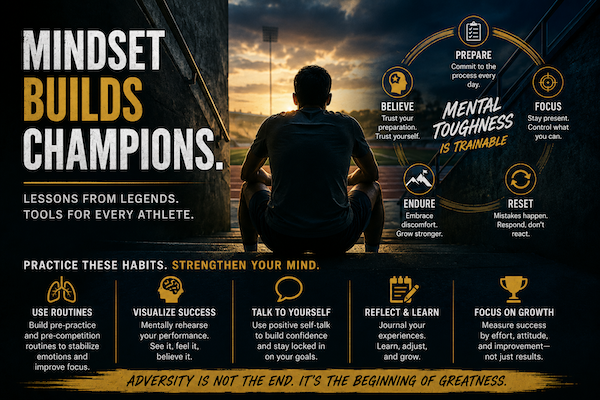
One of the biggest lessons athletes can learn from these legends is that mental toughness is trainable. It is not something athletes are simply born with. Just like strength or speed, it develops through repetition and intentional habits.
One practical strategy athletes can use is creating consistent routines before practice and competition. Mentally tough athletes often rely on routines to stabilize emotions and improve focus. Simple habits like controlled breathing, visualization, positive self-talk, or journaling before training can help athletes reset mentally and prepare with intention.
Another powerful tool is learning how to respond to mistakes. Many athletes waste energy becoming frustrated after errors. Jordan, Phelps, and Nadal all understood that dwelling on mistakes hurts future performance. Athletes should practice using “reset cues” after mistakes, such as taking a deep breath, repeating a phrase like “next play,” or focusing on one controllable action. This trains the mind to recover faster under pressure.
Athletes should also learn to embrace discomfort instead of avoiding it. Growth rarely happens inside comfort zones. Michael Phelps became great because he consistently embraced the difficult, repetitive, and uncomfortable aspects of training that many athletes avoid. Mentally tough athletes stop viewing discomfort as a threat and begin seeing it as part of the process.
Parents can support this development by praising effort, resilience, discipline, and attitude rather than only results. Confidence built only on winning is fragile. Confidence built on preparation, growth, and perseverance lasts much longer.
The greatest athletes in history did not avoid adversity. They learned how to use it as fuel.