
The Overwhelming Pressure High School Athletes Face
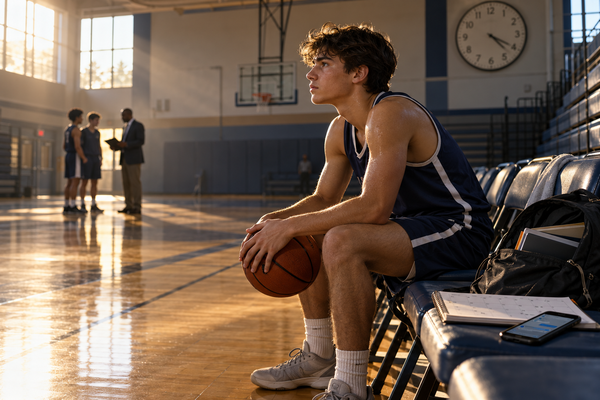
High school can be one of the toughest periods for athletes to handle pressure. Alongside physical development, academic expectations, friendships, and growing independence, many teenagers face another overwhelming question: “Am I doing enough to get to the next level?”
Suddenly, the sport they once played for fun starts feeling like an audition for their future. Every competition seems more important. Every mistake feels more costly. And every passing month can bring the fear that opportunities are slipping away.
For athletes dreaming of college competition, this pressure can become exhausting.
The Weight of “I Need Results Now”
College aspirations can turn ordinary competition into something much heavier. Athletes may believe they need better statistics, higher rankings, faster times, or a breakthrough performance immediately.
Their thoughts shift from executing skills to predicting consequences:
“What if the coach watching isn’t impressed?”
“What if this is my last chance?”
“What if all these years of work lead nowhere?”
Add schoolwork, admissions requirements, family expectations, and financial concerns, and athletes can feel responsible for securing their entire future before finishing high school.
These pressures arrive while teenagers are still learning how to manage stress, relationships, and uncertainty. Feeling overwhelmed does not mean an athlete lacks commitment or toughness.
College Deadline Anxiety
“College deadline anxiety” describes the feeling that time is running out to become the athlete a college program will want. Here, it is a descriptive phrase, not a clinical diagnosis.
A junior may think, “I should already have offers.” A senior may approach every competition believing, “I cannot afford another bad performance.”
Recruiting timelines vary, but anxious athletes often experience them as one unforgiving countdown.
That urgency can interfere with performance. Athletes may become hesitant, force opportunities, or obsess over mistakes. Instead of trusting their preparation, they try to control everything.
Pressure can produce performance below an athlete’s capabilities, a phenomenon commonly called choking under pressure. Unfortunately, the moments athletes desperately want to perform their best can become the moments when they struggle most.
Why More Practice Alone Is Not Enough
When results decline, the automatic response is often more practice.
Physical preparation matters. But additional repetitions alone do not necessarily teach athletes how to respond to recruiting uncertainty, recover after mistakes, or compete while nervous.
An athlete can execute beautifully in practice and struggle when evaluation enters the picture.
Many athletes reach these demanding years without structured mental training. There is no single reliable percentage showing how many perform their worst specifically because they lack it. However, leaving mental skills untrained can leave athletes without practiced responses when pressure rises.
The answer is not simply working harder. It includes learning how to access existing abilities under demanding conditions.
The Comparison Trap
Watching teammates receive offers can intensify everything.
A friend commits. A younger athlete gets attention. Social media fills with scholarship announcements.
An athlete begins asking, “Why them and not me?”
Comparison turns someone else’s achievement into supposed evidence of personal failure. Confidence becomes dependent on circumstances outside the athlete’s control.
But another athlete’s offer does not establish your value, determine your ceiling, or tell the complete story of your opportunities.
Practical Ways to Strengthen the Mental Game
Bring attention back to today. Replace “I need a scholarship” with specific actions: communicate with coaches, complete recruiting tasks, and execute your competitive plan. Schedule recruiting work so it does not occupy every waking hour.
Set performance goals you can control. Choose two or three priorities, such as committed decisions, consistent effort, and a reset after mistakes. Evaluate those alongside results.
Practice responding to pressure. Include competitive scenarios in training. Rehearse breathing, useful self-talk, and routines between plays so those responses become familiar.
Protect enjoyment and recovery. Sleep, relationships, and time away from sport support the person doing the performing. Parents can help by asking about effort, learning, and enjoyment instead of making every conversation about college.
Get professional mental training. Athletes do not have to figure this out alone. Since 2011, SPMI has helped thousands of athletes strengthen their mental game, with athletes achieving college scholarships, progressing into professional sports, and simply learning how to have fun again.
Through personalized mental training, athletes can develop confidence, focus, emotional control, and practical responses to pressure. Reach out to SPMI at gospmi.com to schedule a free 15-minute consultation.
Your future matters. Learning to compete with confidence today is part of building it.