
Handling Disappointment After Losses
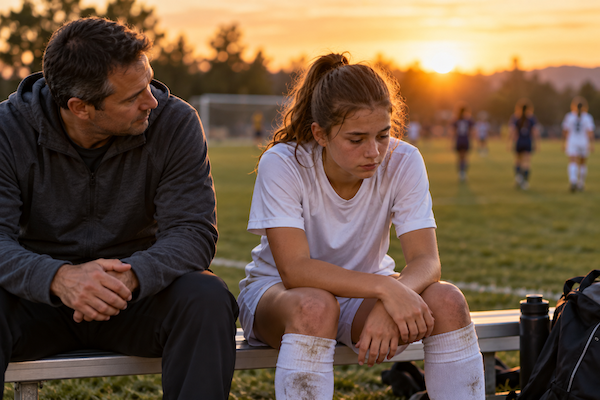
At SPMI, we help athletes and families handle the moments when competition does not go as hoped. Athletes learn practical ways to stay engaged when they are behind, recover after mistakes, and learn from losses without tearing themselves down. Parents learn how to support that growth during competition and afterward, when their athlete may need understanding before advice.
The final whistle blows. A young athlete walks off the field with their shoulders slumped, replaying the missed opportunity that seemed to change everything. Their parent wants to help, but the first impulse may be, “You need to stay positive.” For the athlete, that can sound like one more thing they failed to do.
Disappointment after a loss is normal. The goal is not to look cheerful while losing or to erase frustration immediately afterward. The goal is to keep making useful choices during competition, then turn the experience into learning without turning a result into a judgment of personal worth.
During competition, return to the next moment
When the score turns against you, the mind often jumps ahead: “We are going to lose.” Bring it back to something you can do now. Before the next point, play, or possession, use a short reset: breathe out, relax your shoulders, name one task, and act. A tennis player might say, “Move my feet.” A basketball player might say, “Get back on defense.” The routine should be brief enough to use when the game is moving fast.
Stay aware of your intensity. Some athletes become frantic and rush; others go quiet and stop taking initiative. Ask, “Do I need to settle down or bring more energy?” Then adjust with one physical action, such as a slower exhale or a more purposeful first step. A consistent routine helps you return to your desired intensity even when the score changes.
Constructive self-talk is specific. “I can still compete for this next play” gives you a direction; “I am terrible” does not. Research reviews have found benefits from self-talk interventions and pre-performance routines in sport, although no technique guarantees a comeback. Practice your reset in training so it is familiar when you need it.
After the loss, separate feelings from identity
Give yourself permission to feel upset. Take a drink, cool down, and let the first wave of emotion pass before analyzing every mistake. Then replace global judgments with accurate observations. “I lost focus after the second set” names something you can address. “I am a failure” makes the loss about who you are.
A study of varsity women athletes found that a self-compassion intervention helped them manage self-criticism, rumination, and concern over mistakes. Being kind to yourself does not mean excusing poor preparation. It means being honest enough to learn without attacking yourself. Try this three-question review: What did I do well even in a loss? What is one pattern I can improve? What will I practice before the next competition? Write down one concrete action and leave the rest of the match behind.
Parents can make resilience easier to practice
It is hard to watch your child look discouraged. Still, asking them to appear calm at all times can add pressure to an already difficult moment. During competition, keep your own reactions steady. Let the coach coach. Notice effort and recovery, not just the scoreboard. Research on young athletes links directive parental behavior and pressure with greater pre-competition anxiety in some settings. That does not mean parents caused a bad performance; it means their responses are part of the environment athletes experience.
Immediately afterward, lead with connection: “I know that hurt. I am proud of how you kept competing.” Ask whether they want to talk now or later. If they are ready, ask what they noticed before offering your observations. Avoid a car ride devoted to corrections or comparisons with another athlete. You can return to a specific lesson when emotions have settled.
Praise the behaviors you want repeated: following a routine after a mistake, adjusting intensity, supporting teammates, and fighting for each new moment. You can also acknowledge when those behaviors broke down without withdrawing warmth. “You looked frustrated after that call. What could help you reset next time?” invites ownership. “Why do you always fall apart?” invites shame.
The real measure of resilience
A resilient athlete can be disappointed and still respond with purpose. Some days that means fighting hard while behind. Other days it means reflecting honestly after a loss and returning to practice with a plan. Athletes build that response through repetition, and parents help by making room for both the feeling and the next step.
If your athlete wants help building a reliable competition routine and learning from losses, SPMI offers a free 15-minute consultation at gospmi.com.