
Managing Pressure in Big Moments of Competition
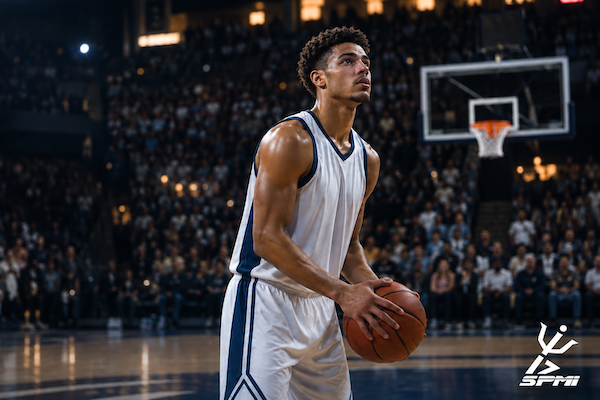
Pressure is part of competition. It appears before championship games, deciding points, final laps, important at bats, and any moment in which an athlete deeply cares about the outcome. The goal is not to eliminate pressure. The goal is to develop the skills to perform effectively while experiencing it.
At SPMI, we often work with athletes who perform confidently in practice but struggle to access that same level during competition. Athletes and parents frequently seek our help because pressure is affecting confidence, focus, emotional control, or enjoyment. Through personalized mental training, athletes learn practical skills that help them manage pressure and compete more freely when the moment matters most.
Many athletes assume that nervousness means they are unprepared. In reality, a faster heartbeat, butterflies, and increased alertness are normal responses to a meaningful challenge. Problems begin when an athlete interprets those sensations as evidence that something is wrong. Thoughts such as “I cannot mess this up” shift attention away from the task and toward fear of the result.
Research supports the importance of that interpretation. Studies of stress appraisal distinguish between a challenge response, in which athletes believe they can meet the demands before them, and a threat response, in which the demands appear greater than their ability to cope. Athletes are more likely to perform freely when they view physical activation as useful energy. Research on cognitive reappraisal also shows that changing the meaning assigned to an emotion can help regulate it.
Giannis Antetokounmpo provided a memorable example during Game 6 of the 2021 NBA Finals. Opposing crowds had tried to disrupt him at the free throw line, and his struggles became a major storyline. With a championship at stake, he made 17 of 19 free throws and scored 50 points to lead Milwaukee to the title. He trusted his routine and responded one attempt at a time.
Solutions for Athletes
1. Rename the feeling
Instead of saying, “I am too nervous,” try, “My body is giving me energy because this matters.” This gives the feeling a more useful meaning. Excitement and nervousness can feel similar in the body, but the label an athlete chooses influences the response.
2. Build a repeatable reset routine
A reset should be simple enough to use under pressure. Take one controlled breath, release tension, use a cue such as “next play,” and reconnect to one task. Practicing this routine during training makes it more dependable during competition.
3. Focus on controllable actions
Pressure grows when attention becomes attached to winning, rankings, scholarships, statistics, or disappointing others. Replace outcome thoughts with immediate performance targets such as moving the feet, completing the follow through, communicating, or attacking the next play. The clearer the target, the easier it is to remain present.
4. Rehearse pressure before competition
Athletes should not wait for the biggest event to practice discomfort. Training can include consequences, scoring scenarios, time limits, crowd noise, or competitive challenges. Visualization can also help athletes imagine the pressure and rehearse breathing, resetting, and executing successfully.
5. Accept mistakes quickly
Trying to play perfectly often increases tension and hesitation. Mentally tough athletes expect adversity and prepare a response. After a mistake, acknowledge it, make one adjustment if necessary, and return attention to the next opportunity.
Solutions for Parents
Parents influence how young athletes interpret important moments. Before competition, avoid emphasizing rankings, results, money spent, or who is watching. Ask, “What do you want to commit to today?” or “What will your reset look like after a mistake?” This directs attention toward controllable actions.
During competition, maintain steady body language. Visible frustration, constant instruction, or emotional reactions can make the athlete feel responsible for managing the parent’s emotions in addition to their own. Afterward, allow time for the athlete to decompress. Begin with support rather than analysis: “I loved watching you compete” or “I am proud of how you kept fighting.” Technical feedback can come later, preferably when the athlete is ready to receive it.
Parents should also normalize nervousness. A young athlete does not need to feel fearless to perform well. They need to know that pressure is not a warning to retreat. It is an opportunity to use the mental skills they have trained.
Big moments reveal habits. When athletes practice productive self talk, controlled breathing, present moment focus, visualization, and rapid recovery from mistakes, pressure becomes more manageable. The objective is not to wait until fear disappears. It is to trust the routine, embrace the challenge, and compete with courage anyway.
Schedule a Free 15 Minute Consultation
If pressure is preventing you or your athlete from performing confidently in competition, SPMI offers a free 15 minute consultation. This call gives athletes and parents an opportunity to discuss the athlete’s struggles and goals, ask questions, learn more about our one on one mental training, and determine whether SPMI is the right fit for their athlete.